The best trailer latch depends on what you need to secure: a stake-bed gate, an open door, or a compartment. The Lonffery set is best for stake sides and wooden gates, while the Buyers Products holdback and Camp’N catch keep doors open. For a lockable access panel, consider the WINOMO paddle latch; for a welded gate closure, the SPARKWHIZ spring latch offers a simple bolt-style option.
| Product | Best For | Latch Type |
|---|---|---|
| Lonffery Trailer Gate Latch | Stake-bed sides and gates | Straight gate latch set |
| Buyers Products DH304 | Holding doors open | Hook and keeper |
| WINOMO Paddle Latch | Lockable trailer access | Keyed paddle lock |
| SPARKWHIZ Spring Latch | Weld-on gate closures | Spring-loaded bolt |
| Camp’N RV Door Holder | RV and camper doors | T-style door catch |
Lonffery Trailer Gate Latch

Best for: Stake trucks, flatbeds, wooden trailer gates, and fence-style closures. This set includes two latch assemblies, each made up of a flat plate, side plate, curved plate, and handle. The galvanized, zinc-plated steel construction is intended to resist outdoor weather and makes this a practical choice for buyers who need multiple gate components.
Choose this if you want a multi-piece straight latch arrangement for a stake-bed or similar gate. Its broad application is useful where a basic mechanical gate closure is needed rather than a keyed door lock. Limitation: Screws are not included, so the buyer must source suitable fasteners for the installation surface.
Buyers Products DH304 Door Holdback

Best for: Enclosed trailer, box truck, and cargo doors that need to stay open during loading. This holdback uses a 4-inch hook and keeper with a spring-loaded latch. The die-cast aluminum construction resists corrosion and everyday wear, while the spring mechanism is designed to engage quickly and help prevent an open door from swinging shut.
Choose this over a gate bolt if your main task is holding a door open, not securing it closed. Its compact arm is suited to buyers looking for a small door catch. Limitation: It is a door hold-open device, not a keyed security lock or a general-purpose gate latch.
WINOMO Stainless Steel Paddle Latch
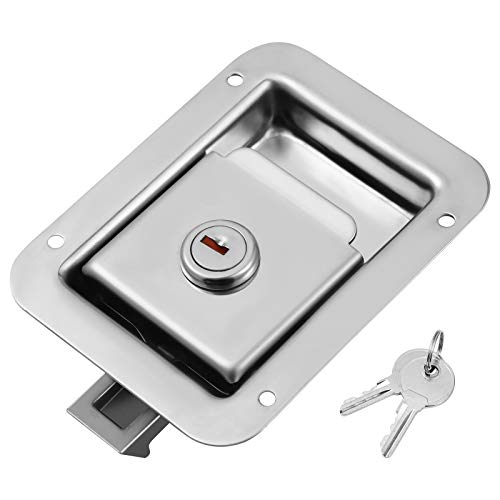
Best for: Buyers who need a lockable closure for a trailer, RV, camper, toolbox, or cabinet door. The stainless steel body is described as corrosion resistant, and the paddle mechanism provides a flush-style handle with keyed locking. Its polished finish is intended to resist rust and wear in outdoor environments.
Choose this when access control matters more than simply keeping a door open or catching a gate. It is a better fit for an access door that needs a compact locking mechanism. Limitation: The supplied product details do not specify installation dimensions or cutout measurements, so verify fit before ordering.
SPARKWHIZ Weld-On Spring Latch

Best for: Trailer or truck owners seeking a spring-loaded bolt closure that can be welded into place. The assembly is made of heavy steel and includes a plain tube. Its spring-loaded bolt can be locked in the open position when the gate needs to remain clear.
Choose this if a permanent, welded installation suits the gate and you want the bolt to stay retracted when needed. The simple spring action can be useful for repeated gate operation. Limitation: This is a weld-on component, so it is not the right choice for buyers who need a no-weld or quick screw-mounted installation.
Camp’N T-Style RV Door Holder

Best for: RV and camper owners who want to keep an exterior door open at a campsite. This black T-style door holder comes as a two-pack with hardware. Its stated purpose is to hold a trailer door in place and reduce unwanted door slamming while the RV is set up.
Choose this if a T-style catch matches your existing door hardware or replacement need. It is more appropriate for holding an RV door open than for locking a compartment or securing a heavy cargo gate. Limitation: Confirm the replacement style and mounting arrangement match your door before buying; the supplied details do not list specific dimensions.
Buying Guide: How To Choose A Trailer Latch
What are you trying to secure?
Match the latch type to its job. A gate latch or spring bolt closes a gate; a door holdback keeps a door open; a paddle latch secures an access panel. These functions are not interchangeable. For example, a door holder should not be treated as a lock, and a keyed paddle latch is not designed to keep a large door propped open.
Will the latch mount to your trailer?
Check the mounting method before choosing. The Lonffery set uses plates and handles, while the SPARKWHIZ assembly is designed to be welded. Door catches and paddle locks also depend on their mounting layout. Compare the product’s dimensions and installation requirements with the existing hardware or available mounting surface.
Do you need weather resistance or a lock?
For outdoor use, consider the listed material and finish. The Lonffery latch is galvanized and zinc-plated steel, the Buyers Products holdback is die-cast aluminum, and the WINOMO lock is stainless steel. If preventing access is important, select a lockable design rather than a basic catch; confirm the lock’s fit and installation details.
Is the hardware included?
Package contents affect installation. The Lonffery package includes latch components but not screws. The Camp’N holder includes hardware. The SPARKWHIZ latch is intended for welding. Verify the fasteners or tools required for your chosen installation rather than assuming they are supplied.
Frequently Asked Questions
What is the difference between a trailer latch and a door holdback?
A trailer latch secures a gate or door in the closed position. A door holdback catches a door and keeps it open. Choose based on whether you need closure or open-door retention.
Which type of latch is best for a trailer gate?
A gate-style latch or spring-loaded bolt is usually the relevant type. The Lonffery set suits stake-bed and wooden gates, while the SPARKWHIZ option is designed for a welded installation.
Can a door catch replace a keyed trailer lock?
No. A door catch holds a door in position but does not necessarily prevent unauthorized access. Choose a keyed paddle latch when a lockable closure is required.
Should I check dimensions before replacing a latch?
Yes. Compare the mounting pattern, available clearance, and hardware dimensions with the existing opening. This is especially important when replacing a flush-mounted lock or T-style door catch.