For Hungarian blue poppy seedlings, the options listed here are seeds rather than live plants, so gardeners will need to sow them and grow their own. Park Seed is a strong fit for a larger packet, All Good Things Organic Seeds suits buyers who prioritize certified-organic seed, and Eden Brothers offers Hungarian breadseed poppy with a stated cool-period requirement. The comparison below highlights packet size and listed features to help you choose.
| Product | Best For | Listed Feature |
|---|---|---|
| Park Seed Hungarian Blue | A larger seed packet | 500 seeds; blue-purple blooms |
| All Good Things Organic | Organic seed shoppers | 250 seeds; stated 75 days from seed to flower |
| Eden Brothers Breadseed | Gardeners planning for dormancy | Cool period of 2–4 weeks |
| Plant Good Seed Organic | Organic seed shoppers | 250 seeds; heirloom and open-pollinated |
| Marde Ross & Company | A larger quantity | Approximately 1,000 seeds |
Park Seed Hungarian Blue Poppy

This pack contains 500 seeds of an heirloom breadseed poppy. The listed description highlights large, single purple-blue blooms with dark markings, strong stems, and healthy foliage. After flowering, the plants develop pods containing grey-blue seeds, which the listing identifies for use in baking.
Best for: Gardeners who want a relatively large packet and value both ornamental blooms and seed pods. It stands out for its specific flower and pod description. Limitation: The product information does not state a days-to-flower estimate or organic certification.
All Good Things Organic Hungarian Poppy

This packet contains a minimum of 250 seeds. The seller describes dark purple blossoms, blue seeds, and a dual ornamental and culinary purpose. It lists the variety as an annual and states that it takes 75 days from seed to flower. The seeds are described as certified organic, non-GMO, heirloom, untreated, and open-pollinated.
Best for: Buyers looking for a smaller packet with several stated seed attributes and a time-to-flower estimate. The listing also notes that blooms attract bees and other beneficial insects. Limitation: The 75-day figure is the seller’s stated estimate, not a guaranteed flowering date for every garden.
Eden Brothers Hungarian Breadseed Poppy

Eden Brothers describes this annual as a garden-and-kitchen variety with vivid purple-blue flowers. Its listing notes that poppy seeds require a cool period of two to four weeks to break dormancy and says some gardeners choose to cold-stratify them.
Best for: Gardeners who want product-specific dormancy guidance before sowing and prefer a vivid purple-blue flower description. Limitation: The provided product information does not specify packet quantity or organic status, so compare those details on the product listing before choosing.
Plant Good Seed Organic Hungarian Poppy
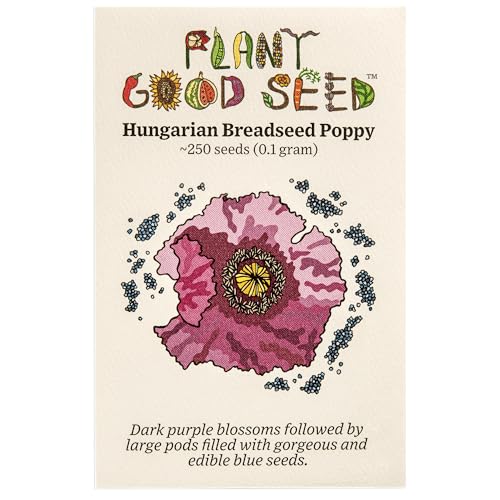
This listing is for a 250-count packet. The seller describes the seeds as certified organic, non-GMO, heirloom, untreated, and open-pollinated. Those details make it easier to compare seed sourcing characteristics with conventional listings.
Best for: Gardeners who want a smaller packet and specifically seek the seed attributes stated by the seller. It is a direct option for planting Hungarian poppies without committing to a bulk quantity. Limitation: The supplied product description does not specify flower color, flowering time, or cultivation instructions.
Marde Ross Hungarian Breadseed Poppy

This product is described as Hungarian breadseed poppy seed, with approximately 1,000 seeds per listing. The seller states that it grows in rocky areas, hillsides, vineyards, and seaside settings.
Best for: Gardeners who want a higher seed count or are planning a larger planting. The listed range of growing settings gives buyers a useful point of comparison. Limitation: “Approximately” means the seed count is not presented as exact, and the supplied description does not specify color or organic status.
Buying Guide: Choosing Hungarian Blue Poppy Seeds
Do you need seedlings or seeds?
These five products are seed packets, not live seedlings. Choose them if you are prepared to sow seeds and care for the plants as they grow. If you need an established plant, look for a live-plant listing and confirm its shipping season and condition separately.
How many seeds should you buy?
Match quantity to the area you plan to plant and how many plants you want to raise. The options here range from 250 seeds to approximately 1,000, with Park Seed listing 500 and other products offering their own stated packet sizes. A higher count can suit a larger planting, but it does not guarantee a particular number of mature plants.
Which seed features matter most?
Compare flower color, stated time to flower, and seed sourcing claims. All Good Things lists a 75-day estimate and organic attributes; Plant Good Seed emphasizes organic and heirloom attributes; Park Seed describes purple-blue blooms and grey-blue seed pods. Eden Brothers is the option with a stated cool-period note. Always follow the instructions on the packet, since the supplied product descriptions do not give complete sowing directions.
What growing conditions should you check?
Review the packet’s planting information for your region, timing, and site conditions. Eden Brothers specifically notes a two-to-four-week cool period for dormancy. The other listings provided here do not include equivalent detail, so do not assume their sowing recommendations are identical. Check local rules before growing poppies, and follow applicable regulations.
Frequently Asked Questions
Are these Hungarian blue poppy seedlings?
No. The products listed are seeds, which can be grown into seedlings after sowing.
Which option lists the most seeds?
Marde Ross & Company lists approximately 1,000 seeds. Plant Good Seed also offers a separate 2,000-count product, but it is not included in this five-product comparison.
Which listing gives a time to flower?
All Good Things Organic Seeds states 75 days from seed to flower.
Which listing mentions cold stratification?
Eden Brothers says the seeds require a cool period of two to four weeks to break dormancy and notes that some gardeners cold-stratify them.
Are the seeds edible?
Some listings describe the resulting seeds as culinary or suitable for baking. Follow the product’s instructions and applicable food-safety guidance; do not assume every seed product is intended for consumption.