Choosing the right PB (polybutylene) to PEX adapter helps prevent leaks and simplifies plumbing upgrades. This guide highlights five compatible adapters, explaining who benefits most, where they excel, and practical trade-offs. Ideal buyers include DIY homeowners planning from PB to PEX, professional installers needing versatile kits, and remodelers replacing aging plumbing with modern PEX. The following table summarizes core product options to speed decision-making.
| Product | Best For | Key Benefit |
|---|---|---|
| SharkBite Max 1/2″ Transition Coupling | Wet-line installations | Push-to-connect for fast, solder-free transitions |
| XFITTING 1/2″ PEX x PB (Repair Kit) | Versatile PEX to PB repairs | Durable ring, broad compatibility |
| HeSun 10-Pack 1/2″ Couplings | Bulk residential projects | Lead-free brass, NSF/ANSI 61 capable |
| EFIELD 1/2″ PEX x PB Transition | Direct replacement kits | Lead-free, clamp-compatible |
| XFITTING 3/4″ PEX x PB Transition | Larger diameter piping | Strong PB to PEX splice with rings |
SharkBite Max 1/2″ Polybutylene Transition Coupling

The SharkBite Max transition coupling is designed for easy, push-to-connect transitions from PB to PEX, copper, CPVC, PE-RT, or HDPE. It works without soldering, glues, or extra tools, and can be installed in wet lines. Best for quick repairs or remodels where speed matters and a leak-free seal is essential. A reinforced stainless steel collar adds strength, reducing insertion force and improving reliability.
Best for: DIY homeowners and professionals seeking a fast, tool-free PB to PEX transition that can be installed even with water in the line. Choose this if you value simplicity and a secure mechanical connection over lengthy installation steps.
Caution: This adapter is a specialized transition, so verify the pipe material and diameter match before installation to avoid compatibility issues.
XFITTING 1/2 In Pex x 1/2 In PB Repair Kit

This kit is designed to connect PEX and PB pipes with a 1/2-inch diameter, featuring a ring for added stability and a durable brass construction. It is suited for repairs or when a direct PEX-to-PB splice is needed in tight spaces. The design is compatible with common clamp and crimp systems used in residential plumbing.
Best for: Projects requiring a reliable, straightforward PEX-to-PB splice with added joint security. Better for repairs where a ring-enhanced joint improves long-term reliability.
Limitation: The kit focuses on a 1/2″ size, so larger diameters require other options in this list.
HeSun 10-Pack Polybutylene Transition Couplings

The HeSun 10-pack offers brass crimp polybutylene transition couplings with 20 rings, designed for PEX A, B, C and PB pipes. These fittings are lead-free brass and touted for high-temperature and corrosion resistance. They are certified for potable water applications and are suitable for both residential potable water lines and hydronic heating distributions.
Best for: Large-scale projects or replacement programs that require multiple, identical transitions. A good option for contractors or homeowners who want ready-to-use spares for quick installation.
Limitation: The listing notes general compatibility; ensure your exact piping system uses a compatible clamp or crimp method.
EFIELD 1/2″ PEX x PB Transition Brass Coupling

EFIELD’s transition coupling directly connects PEX and PB pipes with a 1/2-inch size. It is marketed as lead-free and designed for compatibility with stainless steel clamps and copper crimp rings. The product is positioned for both residential potable water systems and hydronic heating, making it versatile for mixed piping layouts.
Best for: Projects needing a direct, straightforward transition with compatibility to common clamp systems. Better for those who want a widely compatible brass fitting with clamp-based installation.
XFITTING 3/4″ PEX x PB Transition Kit
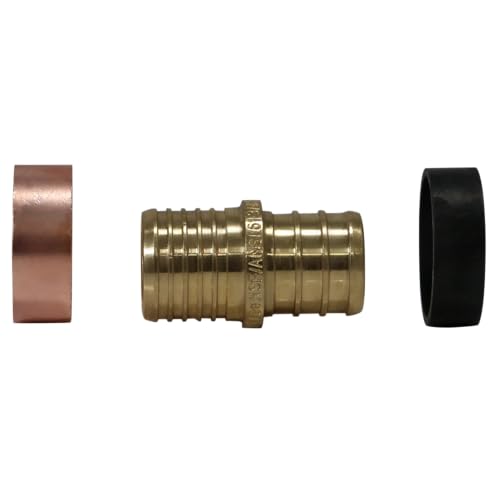
This 3/4-inch transition kit by XFITTING connects PEX and PB piping with a robust profile designed for higher-flow conditions. It includes a ring for secure joints and is built to withstand typical residential hot water applications. The design emphasizes compatibility across PEX brands and systems, making it easier to standardize transitions on multi-brand jobs.
Best for: Projects using larger piping where higher flow is necessary. Choose this if your system requires a 3/4″ PEX to PB transition and you want a reliable, ring-reinforced joint.
Buying Guide: Key Considerations For PB To PEX Adapters
What to check before purchasing? Material quality matters, with brass and stainless-steel components offering durability in hot water and pressure conditions. Consider whether you need push-to-connect simplicity or crimp/ring compatibility for your existing clamps./PB to PEX adapters come in various sizes; ensure the diameter matches the pipe you plan to join. If your project involves wet installations, verify the model’s suitability for live-line work and potential leak resistance.
Compatibility overview: PB, PEX A, B, C, copper, CPVC, PE-RT, and HDPE compatibility varies by product. When possible, match the adapter to your pipe material and the clamping or crimp method you already own to minimize additional purchases. For larger projects, bulk packs can reduce downtime and keep inventory consistent.
Installation notes: Push-to-connect fittings are typically solder-free and quick, but ensure proper seating and verify the insertion depth. For crimp or clamp-based options, use the correct tool and sizes to guarantee a tight, code-compliant joint.
Frequently Asked Questions
- What is the best PB to PEX adapter for DIYers? Push-to-connect models like SharkBite Max offer quick setup without special tools, ideal for beginners or rapid repairs.
- Are PB to PEX adapters universal for all PEX brands? Many are designed to work with multiple PEX brands, but always confirm compatibility with your specific PEX tubing type (A, B, or C).
- Can I install these adapters on live water lines? Some models are rated for wet-line installation, but always follow manufacturer instructions and local codes, and consider turning off the water when possible.
- Which size should I choose? Match the adapter size to your pipe diameter (e.g., 1/2″ or 3/4″). Incorrect size leads to leaks or failed connections.
- Are there safety or certification standards I should look for? Look for NSF/ANSI 61 or ASSE certifications where applicable, and ensure materials are lead-free brass when required for potable water systems.
- Is a bulk pack beneficial for projects? Yes, bulk packs reduce reordering time and ensure consistent fittings across multiple transitions in the same project.