Transform your landscape into a thriving habitat for bees, butterflies, and hummingbirds with carefully selected perennial pollinator seed blends. The following products offer high germination, diverse bloom colors, and long-lasting performance across most soils. This guide highlights five top options and compares their key traits to help you choose the right mix for your garden, meadow, or balcony planter.
| Product | Brand | Seed Count | Varieties | Notes |
|---|---|---|---|---|
| 200,000+ Wildflower Seeds [4oz] 16 Variety Perennial Mix | PLANTMEW | 200,000+ | 16 perennials | Non-GMO, USA-sourced heirloom seeds |
| HOME GROWN Monarch Butterfly Wildflower Seeds Mix (2oz) | HOME GROWN | 20,000+ | Milkweed + nectar flowers | Monarch-friendly mix |
| Burpee Wildflower 25,000 Bulk (18 Varieties) | Burpee | 25,000 | 18 varieties | Non-GMO, pollinator-focused |
| Wildflower Seeds Bulk, 2 Oz. 80,000+ (Save The Bees) | Mountain Valley Seed Company | 80,000+ | 19 varieties | Bee-friendly blend, supports conservation |
| Tactiko Garden 26 Wildflower Seeds Mix | Tactiko Survival | 120,000+ | 26 varieties | Annuals & perennials, large coverage |
PLANTMEW 200,000+ Wildflower Seeds Mix

The PLANTMEW blend features 16 premium perennial varieties, including Purple Coneflower, Black-Eyed Susan, Blue Flax, and Shasta Daisy. The mix is designed to attract bees, butterflies, and birds while boosting biodiversity. It’s suitable for indoor and outdoor planting across USDA zones, offering a high germination rate and rapid sprouting. A growing guide is included to help beginners cultivate a thriving meadow, window box, or border garden with confidence.
Key benefits include non-GMO, USA-sourced heirloom seeds and a large seed count that supports expansive planting projects. The mix emphasizes pollinator health and ecosystem diversity, making it well-suited for backyard beds, community plots, and school gardens.
HOME GROWN Monarch Butterfly Wildflower Mix (2oz)

This mix is tailored to monarch and general pollinator habitats with over 20,000 seeds that combine nectar-rich flowers with butterfly weed and milkweed varieties. It provides season-long color from spring to fall and creates vibrant meadows and beds. The blend is designed for easy growth, making it accessible to both beginners and experienced gardeners.
Growing tips emphasize simple sowing: broadcast the seeds, lightly rake, and water. The mix returns year after year, contributing to lasting biodiversity in your garden while supporting monarch population efforts through native milkweed content.
Burpee Wildflower 25,000 Bulk (18 Varieties)

Burpee’s 18-variety mix blends annual and perennial seeds to attract a wide range of pollinators, including bees and butterflies. The assortment includes favorites such as Cornflower, Zinnia, and Blue Flax, chosen for vibrant color and ease of growth. The bulk bag covers up to a thousand square feet, offering a cost-effective option for large gardens and public spaces.
As a Non-GMO seed mix, it remains suitable for organic-style plantings in sunny areas. It’s best applied to well-drained soil, with consistent moisture until plants establish, to maximize germination and flowering performance.
Wildflower Seeds Bulk 80,000+ (Save The Bees)

This blend offers 19 non-GMO varieties designed to attract bees, butterflies, and other pollinators. The mix covers roughly 250 square feet and includes a broad spectrum of nectar-rich flowers, such as Butterfly Milkweed and Purple Coneflower, to create a resilient pollinator habitat. The product explicitly supports pollinator conservation through a Bee Conservancy donation tied to purchases.
The seeds are suitable for large beds, meadows, or prairie-style landscaping and are described as adaptable to a wide range of North American conditions. It’s a practical choice for gardeners seeking a high-seed-count option with a strong ecological focus.
Tactiko Garden 26 Wildflower Seeds Mix
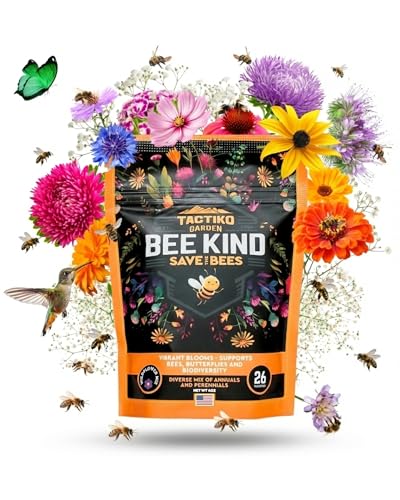
Designed to save the bees, this mix blends 26 annual and perennial varieties, providing 120,000+ seeds in a single 4 oz bag. The seeds are USA-grown and harvested, ensuring a robust pollinator garden across backyards, meadows, borders, and large landscape projects. The mix promises color from season to season and supports a broad range of pollinators, including honeybees, butterflies, and hummingbirds.
Coverage can extend up to 600 square feet, making it a strong option for mid to large scale projects. It balances quick-blooming annuals with durable perennials for first-year impact and long-term habitat value.
Buying Guide: Key Purchase Considerations
- Pollinator targets: Match seed mixes to your local pollinators (bees, butterflies, monarchs, hummingbirds). Some blends include milkweed for monarchs, others emphasize nectar-rich perennials for ongoing blooms.
- Germination and vigor: Look for blends with high germination rates and clear growing guides. Non-GMO and USA-sourced seeds may indicate quality control and local adaptability.
- Bloom longevity: Prefer mixes that combine annuals and perennials to ensure year-after-year color. Consider climate and sunlight when selecting a mix for your space.
- Seed quantity and coverage: Evaluate the bag size and coverage area to estimate the scale of your project. Bulk bags are cost-effective for larger spaces; smaller bags suit containers and small beds.
- Soil and sunlight compatibility: Check if the mix requires full sun, moderate sun, or shade. Most pollinator mixes thrive in sunny, well-drained soils but vary by variety.
- Conservation and ethics: Some products support pollinator conservation organizations through donations or partnerships—worth considering for eco-conscious buyers.
- Maintenance needs: Some blends demand regular watering during establishment. Choose mixes that align with your ability to water and weed as needed.
- Regional suitability: Some blends are marketed as universally adaptable, while others target Midwest or coastal climates. Verify your USDA hardiness zone compatibility.
- Ease of use: For beginners, pre-mixed or easy-grow blends with clear guides reduce setup time and improve success rates.
Overall, selecting a perennial pollinator seed mix involves balancing immediate color with long-term habitat value. Varieties that include both nectar-rich flowers and host plants like milkweed will typically support a broader pollinator community. Bulk options suit larger plots, while curated mixes work well for containers, raised beds, or smaller yards. Combining two or more blends can also diversify bloom times and resilience across weather patterns.