Looking for slow feeder dog toys that promote mental stimulation while preventing gobbling too fast? This guide highlights five top picks ideal for different dogs, from puppies to adults. Each option uses treat-dispensing mechanics to encourage puzzle solving, rewarding play with food. Best suits dogs needing extended enrichment, anxiety relief, or energy expenditure, with clear reasons for why each stands out.
Summary table of selected products:
| Product | Best For | Key Benefit |
|---|---|---|
| BSISUERM Adjustable Treat Dispensing Ball | Small to large dogs seeking adjustable difficulty | Two adjustable food-dispensing spheres for controlled feeding pace |
| Potaroma Dog Puzzle Toy 2 Levels | Dogs needing multi-step challenges | Two levels with a large top granary for slow feeding |
| Outward Hound Treat Tumble | Intro to puzzles; puppies and beginners | Level-1 beginner puzzle with multiple play modes |
| StarMark Bob-A-Lot Interactive Toy | Long-lasting boredom relief | Interactive wobble toy with treat release |
| knitly Interactive Treat Toy | Active dogs needing cardio and mental work | Adjustable openings and durable nylon design |
BSISUERM Adjustable Treat Dispensing Ball

- Features: Treat Distribution with differently sized spheres at both ends; moves within a fixed area; food dispensed from holes on both sides as dogs push it.
- Adjustable Switch: Two spheres each have a food-dispensing switch to match different dry foods and control the amount dispensed, extending playtime.
- Increase Pet Intelligence: Combines training with rewards to stimulate hunting instincts and learning.
Best for: Small to medium and even larger dogs that enjoy dynamic challenges and need adjustable difficulty. It helps slow eating while providing mental stimulation. Use with supervision to monitor the food flow and avoid gulping.
Caution: The toy relies on the dog’s persistence; overly aggressive chewers may damage components. Regular inspection is advised.
Potaroma Dog Puzzle Toy 2 Levels
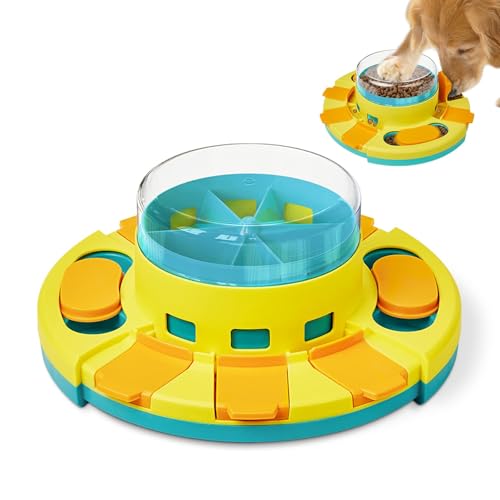
- Two Levels in One: Level 1 puzzle to start, Level 2 adds top-cover activation for additional challenge.
- Slow Feeder Design: Large capacity top granary reduces refills; promotes healthier eating pace by slowing intake.
- Stability: Four non-slip mats and weighted base help prevent tipping during play.
Best for: Dogs that benefit from progressive difficulty and a reliable slow-feeding mechanism, suitable for both small and large breeds.
Caution: The complexity may be too high for very young puppies or dogs new to puzzles; begin with Level 1 and supervise.
StarMark Bob-A-Lot Interactive Toy

- Overview: An interactive treat-dispensing wobble toy designed to keep dogs engaged through movement and treats.
- Simple Play: Multiple ways to roll and nudge the toy to release treats; good for beginners and mid-level puzzle fun.
- Notes: Easy to clean and favorable for boredom relief with repetitive play.
Best for: Dogs who need consistent enrichment and a reliable, self-amplifying play experience. Better for dogs that enjoy rolling and nudging motions over complex multi-step puzzles.
Caution: Its mechanics are less about multi-step problem solving and more about exploration; choose this if you want steady engagement rather than high difficulty.
knitly Adjustable Treat Dispensing Toy

- Notes: Made from Ultra-Rigid Nylon; designed for enrichment and longer play sessions; not ideal for aggressive chewers.
- High-Energy Fun: Enables cardio-like play as dogs push, nudge, and roll to release treats for 10–30 minutes of activity.
- Slow Feeding: Infinitely adjustable treat openings that work with kibble, freeze-dried treats, or dental sticks to slow ingestion significantly.
Best for: Active dogs that benefit from both mental and physical work, with a focus on calorie burning and cognitive challenge. Choose this if you want a durable, long-lasting enrichment toy.
Caution: Not recommended for large dogs with aggressive chewing habits; proper supervision is advised.
Buying Guide: Slow Feeder Dog Toy Essentials
What should you consider when picking a slow feeder dog toy?
- Dog size and chewing style: Choose a toy sized for your dog and made from materials that withstand your dog’s bite. For aggressive chewers, look for tougher plastics and reinforced designs.
- Difficulty and adjustability: If your dog is new to puzzles, start with Level 1 or simpler configurations. Look for toys with adjustable openings or multi-level challenges to grow with your dog.
- Dispenser mechanics: Some toys dispense treats from one end, others from both ends or via top covers. Consider your dog’s food preferences and feeding pace when choosing.
- Stability: Non-slip bases and weighted designs help prevent tipping or sliding during play, especially for energetic dogs.
- Ease of cleaning: Dishwasher-safe parts or simple hand-cleaning reduces maintenance and encourages consistent use.
- Safety and materials: Use food-grade materials and avoid toys with small detachable parts that could be swallowed. Supervised play is recommended, especially with new toys.
- Treatment compatibility: Ensure the toy supports your dog’s usual kibble size, treats, or dental sticks to maintain consistent reward patterns.
FAQ
- What is a slow feeder dog toy?
A slow feeder dog toy is an interactive toy that dispenses treats or food as a dog interacts with it, encouraging problem-solving while slowing down eating. - Are slow feeder toys good for all dogs?
They are beneficial for many dogs to reduce boredom and promote intelligence, but very young puppies or dogs with limited training should start with simpler puzzles and supervised use. - How do I choose the right difficulty?
Start with an easier level, observe how quickly your dog learns, and progressively increase complexity or adjust openings to maintain engagement without frustration. - Can these toys help with anxiety or destructive chewing?
Yes, mentally stimulating toys can reduce anxiety and redirect chewing into constructive play, provided play is properly supervised and balanced with routine. - How should I clean these toys?
Check the product’s care label; many are dishwasher-safe or require warm soapy water. Regular cleaning helps maintain hygiene and treats’ taste.