Answer: For 1st graders learning addition and subtraction, use a mix of simple, double-sided card sets and larger, visually engaging decks that offer quick practice and self-checking. The top picks below target early math fluency, number sense, and timed recall, while supporting both classroom learning and home practice. Ideal buyers include parents seeking at-home support, teachers building quick warm-ups, and tutors helping students reach basic fact mastery.
Overview of featured products:
| Product | Why It’s a Fit for 1st Grade | Best For |
|---|---|---|
| School Zone Get Ready Flash Cards Addition & Subtraction 2-Pack | 55 addition, 53 subtraction cards; includes parental guidance cards | Daily drill and quick review |
| Star Right Math Flash Cards Set of 4 | Includes addition, subtraction, multiplication, division; color-coded and ring-punched | Comprehensive practice for advancing beyond basics |
| School Zone Addition 0-12 Flash Cards | 56 cards, bold numbers, easy-to-read formatting | Foundational fact practice |
| QUOKKA Addition & Subtraction Flash Cards (338 jumbo) | 169 addition + 169 subtraction with visual aids | High-volume drill and visual reinforcement |
| School Zone Subtraction 0-12 Flash Cards | 53 double-sided cards with bold numbers and bright art | Subtraction fact mastery |
The following sections provide a deeper look at each product, including who it’s best for, why it was selected, and practical cautions to consider before purchase.
School Zone Get Ready Flash Cards: Addition & Subtraction
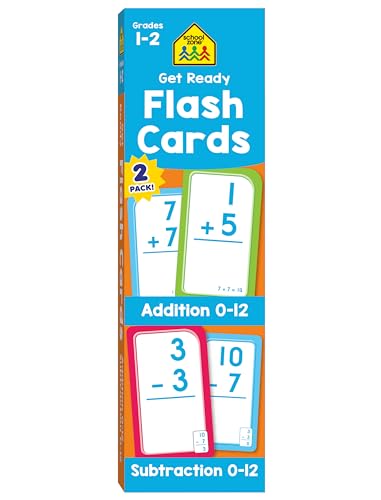
What it includes: 55 addition and 53 subtraction problem cards, plus 1 parent card for addition and 2 parent cards for subtraction, along with a subtraction answer card. The set is designed for ages 6–8, aligning with typical 1st-to-2nd grade math work.
Best for: Busy families and teachers who want a compact set for quick drills and formative practice. The parent cards support guided learning and at-home review, while the mix of addition and subtraction improves fluency.
Why selected: Its balanced scope targets essential 1st-grade facts without overwhelming learners, and the single-pack convenience makes it easy to deploy in various settings.
Caution: The absence of multiple difficulty levels means advanced 1st graders may need additional cards to push beyond 12+ problems.
Star Right Math Flash Cards Set of 4

What it includes: A 4-ring, hole-punched set covering addition, subtraction, multiplication, and division with a total of 208 cards. Cards feature two back-to-back equations and color-coded borders for quick sorting.
Best for: Students starting to move beyond basic addition/subtraction and exploring multiplication and division, or households wanting a longer-term math drill resource.
Why selected: The dual-back design and organized structure facilitate self-checking and independent practice, while rings help keep cards accessible for group activity and rotation.
Caution: May be larger and more permanent than needed for younger or early learners focused strictly on 1st-grade addition/subtraction.
School Zone Addition 0-12 Flash Cards

What it includes: 56 cards focused on problems from 0+0 to 12+12. Numbers are bold and block-style for readability. It often includes an online gift code as part of its packaging.
Best for: Learners needing clear, bold visuals and straightforward addition practice with short practice bouts during the school day or afterschool sessions.
Why selected: The large, bold numerals improve visibility and reduce cognitive load, which helps early learners stay engaged during timed practice.
Caution: Packaging varies, and the inclusion of an online gift code may be unexpected for some buyers who prefer no extras.
QUOKKA Addition & Subtraction Flash Cards Set

What it includes: 338 jumbo flash cards—169 addition and 169 subtraction—designed with visual aids on the back to reinforce concepts. Also includes sorting rings for organization.
Best for: Students who benefit from high-volume practice and strong visual cues, particularly in homeschool settings or tutoring sessions that emphasize repetition and self-checking.
Why selected: The large jumbo format and visual supports help younger learners map concrete images to abstract facts, supporting memory retention.
Caution: The sheer card volume may be overwhelming for some learners; pace and session length should be managed to maintain engagement.
School Zone Subtraction 0-12 Flash Cards

What it includes: 53 double-sided cards featuring subtraction problems from 0–12, with bold numbers and vibrant colors featuring zoo-themed art on each card.
Best for: Kids who need focused subtraction practice to solidify fact fluency, especially when paired with addition sets to balance practice time.
Why selected: The bright, kid-friendly design supports engagement, and double-sided cards maximize practice density in a compact set.
Caution: Only subtraction is covered; pairing with addition cards is recommended to maintain practice variety and fluency development.
Buying Guide: Key Purchase Considerations for 1st Grade Math Flash Cards
What should I look for in early-grade flash cards?
Look for sets that balance addition and subtraction with clear, bold typography. Visual aids, larger card size, and self-checking designs help build the habit of independent practice and reduce frustration for new learners.
How many cards are ideal for daily practice?
A core set of 50–60 cards is a practical daily target for focused sessions, with additional cards for extended practice or more challenging facts. Sets with 100+ cards are better for longer drills or siblings sharing the same kit.
Is ring-bound or lidded packaging better for classroom use?
Ring-bound or hole-punched cards are easier to organize, sort by fact type, and reuse for group activities. This makes them better for classrooms or tutoring centers compared with single-pocket card decks.
Should I choose visual aids or plain numbers?
Visual aids support memory and concept mapping for young learners. If a card set uses images, confirm the visuals clearly connect to the math facts to avoid confusion.
Are sets with subtraction-only or mixed operations preferable?
For 1st graders, mixed sets (addition and subtraction) enable quick fluency and reduce transition time between topics. Subtraction-only sets are useful for targeted practice after mastering addition.
How to structure practice for best results?
Alternate short practice blocks with quick self-checks. Begin with addition or subtraction before mixing in a few mixed-problem rounds. Use a timer to build fluency gradually and celebrate small milestones.
What about durability and kid-friendliness?
Choose sturdy card stock with rounded corners and legible fonts. Durable packaging helps withstand daily use by young learners, especially in busy homes and classrooms.
How can I track progress across a buying year?
Maintain a simple log of mastered facts and attempted ones. Color-code progress by operation (e.g., addition in blue, subtraction in orange) and note areas needing more practice, then rotate among sets to maintain engagement.
Are there any cautions to consider?
Be mindful of overloading a single set with too many new facts at once. Pair new cards with reviewed ones to maintain confidence and reduce frustration. Also verify the card size and readability align with your learner’s needs.
FAQ
- What age are 1st graders for these flash cards? Most sets target ages 5–7, aligning with typical 1st-grade math fluency goals.
- Should I buy multiple sets? Yes, if you want to cover both addition and subtraction extensively and provide varied practice formats.
- Do these sets include answers? Many sets include back-side answers for self-checking, and some provide online resources or answer cards.
- Are ring-bound sets easier to manage? Ring-bound or hole-punched sets are generally easier to organize and reuse for group activities.
- Can these cards be used for homeschooling? Definitely. They offer self-checking design and visual aids suitable for guided independent practice.
- Is there a risk of overload? Start with a smaller subset of cards and gradually add more to maintain engagement and reduce cognitive load.