The right hand held lawn aerator makes compacted soil a thing of the past. This guide identifies five top hand held aerators, explains who they’re best for, and highlights practical buying tips. Ideal for small to mid-sized lawns, these tools help air, water, and nutrients reach grass roots to boost health and growth. They’re best for DIY lawn care enthusiasts, gardeners with limited space, and homeowners looking to revive bare patches without renting heavy equipment.
Summary table of selected products:
| Product | Brand | Best For |
|---|---|---|
| Walensee Lawn Aerator Spike | Walensee | Small yards needing quick, wide coverage and simple use |
| Manual Core Aerator Lawn Tool | LawnVigor | Soil that benefits from hollow-tine aeration and deeper plugs |
| Onadak Lawn Aerator | Onadak | Efficient, high-spike design for faster aeration |
| Bluesea Lawn Aerator Tool | Bluesea | Durability with anti-corrosion finish and dual-layer springs |
| Saker Manual Lawn Aerator | Saker | Budget-conscious buyers wanting 15 spikes for broad coverage |
Walensee Spike Lawn Aerator With 15 Spikes

Best for small to medium lawns that require quick, reliable aeration in one pass. The Walensee spike model uses 15 iron spikes arranged in three rows to cover more ground per step. Spikes are about 2.8 inches long, providing deeper channels that improve air, water, and nutrient flow to roots. The tool is designed for steady footing and user comfort without the fuss of adjustable straps or uncomfortable footwear.
- Best for: Small yards, edging, and patching bare spots
- Why selected: High spike count per pass improves efficiency in tight spaces
- Caution: Spikes are sharp; handle carefully during setup and storage
Manual Core Aerator Lawn Tool With 3 Hollow Tines
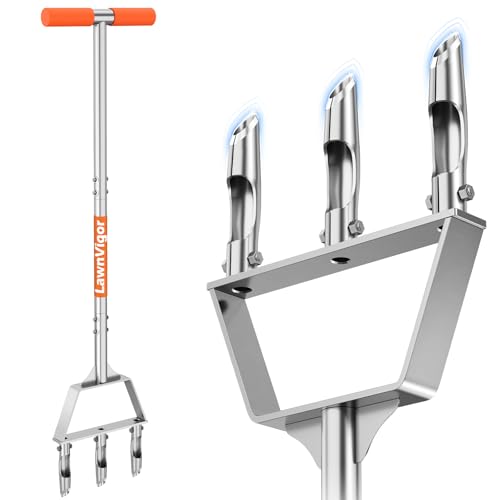
Best for homeowners who want deeper plug aeration to promote root growth and better drainage. The LawnVigor tool features three hollow tines designed to remove soil plugs while reducing clogs and enabling water and air to reach roots more effectively. It’s built with sturdy metal and heat-treated hollow tines, and includes guidance to keep plastic inserts in place for easy plug release.
- Best for: Deeper soil penetration and plug-based aeration
- Why selected: Hollow tines create larger, deeper holes for improved absorption
- Caution: Water soil before use; avoid side-to-side rocking in ground
Onadak Lawn Aerator With 15 Iron Spikes

Best for users seeking fast coverage with multiple spikes in a single pass. The Onadak aerator uses 15 sharp metal spikes (each about 3 inches long) to maximize efficiency compared with fewer-spike models. It is designed to reduce soil sloughing and allow air, water, and fertilizer to reach root systems more effectively. A practical option for mid-sized lawns and quick rejuvenation projects.
- Best for: Quick aeration in mid-sized yards
- Why selected: More spikes mean faster, more even coverage
- Caution: Proper assembly is required; incorrect base connection can render it unusable
Bluesea Lawn Aerator Tool With 16 Spikes

Best for durability-focused buyers who want a sturdy tool with corrosion resistance and a user-friendly spring system. The Bluesea aerator uses 16 spikes and a double-layer spring design to prevent jammed spikes and ease cleanup after aeration. It features an enamel-coated iron construction and a reinforced frame for long-term use, making it suitable for frequent lawn care routines.
- Best for: Durable, long-lasting lawn care tools
- Why selected: Spring design reduces debris sticking and simplifies retraction
- Caution: Heavy-duty build means slightly higher effort to press into very hard soil
Saker Manual Lawn Aerator With 15 Spikes

Best for budget-conscious buyers who still want effective surface aeration. The Saker tool provides 15 iron spikes (about 2.3 inches) designed to create multiple holes per step, improving drainage and air circulation. It’s a straightforward option for typical residential lawns and patio edges where spot aeration is beneficial.
- Best for: Cost-effective, broad coverage for small to mid lawns
- Why selected: Even spike distribution facilitates efficient aeration
- Caution: Ensure proper soil moisture for easier penetration
Buying Guide: Hand Held Lawn Aerators
- Spike vs hollow-tine design: Spike aerators rotate soil on contact, creating channels but not removing plugs. Hollow-tine models pull out plugs for more air and nutrient exchange; choose based on desired soil relief and lawn goals.
- Number of spikes: More spikes generally increase coverage per pass but may require more force. Balance ground size with strength and comfort in use.
- Spike length and steel quality: Longer, sharp spikes penetrate compacted soil better. Look for heat-treated steel or forged spikes for durability.
- Build and comfort: Ergonomic handles, padded grips, and stable footing reduce fatigue during longer sessions. Consider models with adjustable height for user comfort.
- Maintenance: Hollow-tine tools require care to keep inserts in place; spike tools benefit from clean storage to prevent rust and dulling.
- Soil preparation: Water dry soil before aeration to ease penetration. Avoid aerating overly wet or muddy soil to prevent damage to the tool and turf.
FAQ
- What is the main difference between spike and hollow-tine aerators?
The spike aerator creates channels by pushing into the soil, while hollow-tine aerators remove soil plugs, delivering deeper channels for drainage and root access. - How many spikes should I choose for a small yard?
Models with 15 spikes or more generally offer efficient coverage for small to medium lawns in fewer passes. - Is it better to aerate before or after seeding?
Aerate before seeding to improve seed-to-soil contact and nutrient access; avoid disturbing newly seeded patches. - Can I use a hand held aerator on compacted clay soils?
Yes, but be prepared to apply more effort and consider hollow-tine models for deeper penetration. - Do I need to water after aeration?
Light watering can help settled soil, but avoid over-watering right after aeration to prevent soil displacement. - How often should I aerate my lawn?
For heavily compacted or high-traffic lawns, 1–2 times per year is common; lighter lawns may only need annual attention.