Looking for the best 4 string bass bridges to improve tone, sustain, and tuning stability? This guide highlights top options suited for different needs—from vintage-inspired feel to high-mass designs that improve attack and resonance. The selections are organized to help players compare suitability for jazz basses, precision bass styles, or modern setups. The table below summarizes the five chosen products and what each is best for.
| Product | Best For | Key Benefit |
|---|---|---|
| Guyker GB406 4 String Bass Bridge (Black) | Players needing durable roller saddles | Minimizes string breakage; precise intonation |
| Fender HiMass 4-String Bass Bridge Assembly (Zinc) | Increased sustain and resonance | HiMass design for stronger vibration transfer |
| Guyker GB403 High Mass Bass Bridge (Chrome) | Jazz/Precision-style bass upgrades | High mass design with vintage brass saddles |
| Guyker GB404 4-String Fixed Bridge (Black) | Direct replacement for Jazz/Precision basses | Fixed bridge with 19mm spacing |
| Metallor 4-String Bass Bridge (Black) | Top-load Jazz/Precision upgrades | Vintage-style four-saddle top-load design |
Guyker GB406 4 String Bass Bridge — Black

Material: brass roller and zinc alloy saddle and body. This bridge uses roller saddles to reduce string breakage while preserving precise intonation and tuning stability. It offers adjustable string spacing from 17mm to 19mm, and anywhere in between, providing flexibility for different playing styles. Best for players who want improved tuning stability with adjustable spacing and a durable build. A potential limitation is that roller saddles require careful setup to maximize longevity.
Fender HiMass 4-String Bass Bridge Assembly — Zinc

The HiMass design uses zinc saddles and a solid baseplate to transfer string vibration efficiently, delivering increased sustain and resonance. Spacing is around .75 inches (19mm), with a focus on comfortable finger placement across playing techniques. This is a strong choice for players seeking a noticeable tonal boost without altering the fundamental character of the bass. A caution: the heavier mass may require bridge plate clearance checks on some bodies.
Guyker GB403 High Mass Bass Bridge — Chrome
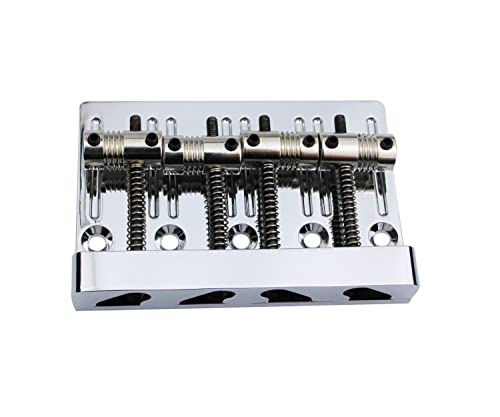
Bridge size is approximately 80 x 56 mm with a 19 mm string spacing and a 56 mm E-to-E spread. It uses a zinc alloy baseplate with CNC-machined brass saddles for durability and a classic vintage look. This product is best for players who want a robust high-mass replacement that can enhance sustain—though installation requires compatible mounting holes and alignment checks. Best for players who value a vintage aesthetic paired with modern machining.
Guyker GB404 4 String Bass Bridge — Black

With a fixed bridge design and 19mm string spacing, this direct replacement suits Jazz bass or precision-style instruments. It is positioned as an easy upgrade for better stability and solid intonation on 4-string setups. The limitation is that it is a fixed bridge, which may not offer the same tuning flexibility as roller saddles for aggressive bending styles.
Guyker GB403 Black — High Mass with Vintage Brass Saddles
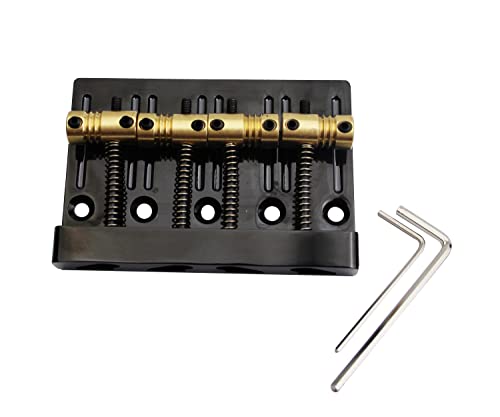
Process notes indicate a high-mass bridge with vintage brass saddles, designed for Jazz bass applications. The product is comparable to other high-mass options but with a distinct vintage brass aesthetic. Best for players seeking heavier resonance and a traditional look, though it shares the general need for proper fitment in the instrument’s bridge cavity.
Fender HiMass 4-String Bridge — Brass Saddles, Chrome

This HiMass variant uses brass machined saddles and baseplate to further elevate sustain and tonal fullness. The Chrome finish provides a sleek look and consistent construction. Choose this if you want a brighter attack with enhanced low-end response, while avoiding models with more complex string spacing if your bass already has precise alignment requirements.
Metallor 4 String Bass Bridge — Top Load Black

The Metallor bridge is a vintage-style top-load bridge for Jazz and Precision basses, offering four adjustable barrel saddles and a 57mm string spread. The base plate measures 80 x 44 mm, and the string spacing is 19mm. This option is best for players who prefer a traditional top-load setup and a classic look, but may require careful string alignment during installation.
Buying Guide
What should you consider when choosing a 4 string bass bridge?
- Bridge type: Roller saddles reduce string breakage and help tuning stability, but may require more setup care. Fixed bridges are simpler to install and maintain, suitable for players who want straightforward stability.
- Material and mass: High-mass designs generally increase sustain and tonal focus but can alter attack and comfort. Zinc and brass components contribute to resonance and durability, while the baseplate geometry affects transfer of vibration.
- String spacing and scale fit: Common spacings are 19mm (0.75 inches) for many Jazz/Precision basses. If your instrument uses a different spacing, ensure the bridge can accommodate it without crowding or intonation issues.
- Mounting compatibility: Check screw hole pattern, body cavity clearance, and whether the bridge matches your bass’s existing bridge plate dimensions. A direct replacement saves time and preserves setup angles.
- Aesthetics and finish: Brass, chrome, or black finishes offer visual harmony with the instrument’s hardware. Finish corrosion resistance is also a practical consideration for longevity.
- Maintenance: Roller saddles require occasional lubrication and careful tightening to maintain intonation. Brass saddles may mark strings slightly on some players’ fingers if they are sensitive to metal contact.
Frequently Asked Questions
- What is the benefit of a high-mass bass bridge?
High-mass bridges transfer string vibration more efficiently, increasing sustain and often improving attack and tonal fullness, especially on jazz and precision basses.
- Do I need 19mm string spacing?
Many 4-string jazz and precision basses use 19mm spacing. If your current setup uses a different spacing, choose a bridge that matches or offers adjustable spacing within your instrument’s tolerances.
- Are roller saddles worth it?
Roller saddles reduce string friction at the saddles, which can lower string breakage and improve tuning stability for players who bend or aggressively detune strings.
- Can I install a new bridge without modifying the body?
Direct replacement bridges with matching screw patterns minimize modification. If the pattern differs, a mounting adapter or body routing may be required.
- Will changing the bridge affect active electronics?
Generally no, but a significant tonal change can reveal how the preamp and pickups respond to altered resonance, so assess your overall setup after installation.
- Which brand offers the most versatile 4-string options?
Brand lines like Guyker and Fender provide multiple designs (roller, high mass, top-load) to suit different playing styles and instrument configurations.