Answering the need for quieter rooms, these suspended ceiling acoustic panels reduce echo, reverberation, and unwanted noise while controlling light reflections. They’re ideal for home theaters, offices, studios, basements, and classrooms. This guide highlights five top options, explains who each is best for, and explains why they stand out. The featured products cover common ceiling sizes—2×2 feet and 2×4 feet—and offer moisture resistance and easy installation for quick acoustic upgrades.
Summary of top picks
| Product | Best For | Key Benefit |
|---|---|---|
| LooYee 24 PCS Black Polyester Fiber Tiles | Home theater and media rooms with glare control needs | Non-reflective black surface reduces light bounce |
| LooYee 12 PCS Black Polyester Fiber Tiles | Basement or larger spaces needing quick 96 sq ft coverage | Same moisture-resistant, noise-reducing design in 2×4 ft size |
| Arrowzoom Acoustic Ceiling Panels | Offices, studios, and media rooms | Dense polyester fiberboard provides effective noise control |
| Otoolling Large Hanging Baffles | Large-volume rooms or elevated ceilings | Wide coverage, easy ceiling mounting with steel cables |
| Armstrong 2×2 Ceiling Tiles | Standard grid ceilings, quick retrofit projects | Easy installation in 15/16″ grids with reduced installation waste |
LooYee 24 PCS Black Polyester Fiber Acoustic Ceiling Tiles

The 24 tiles measure 24 x 24 inches and cover 96 square feet. They are engineered from polyester fiber to cut echo and ambient noise. The non-reflective black surface minimizes light bounce, making them suitable for home theaters and media spaces. The tiles resist warping with moisture-resistant design for durability in varied environments. Best for: small to medium rooms where glare from screens must be minimized. Limitation: standard 2×2 ft tiles may require careful alignment to maintain a uniform look in large rooms.
LooYee 12 PCS Black Polyester Fiber Tiles (2×4 ft)
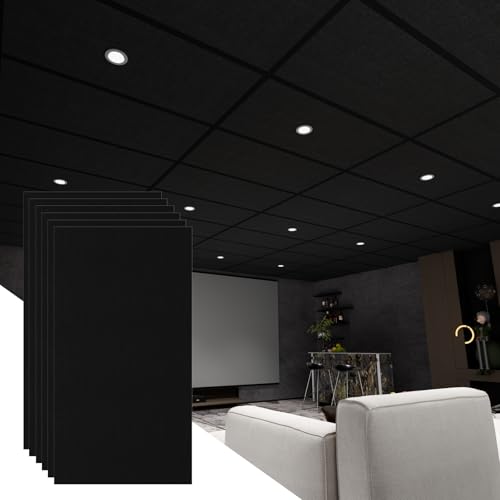
This set uses the same polyester fiber technology as the 2×2 version but in a 2×4 foot tile size, covering about 96 square feet. The non-reflective black finish reduces glare and helps create a focused viewing or working environment. It’s moisture resistant to resist warping and sagging in basements or humid spaces. Best for: larger rooms needing even acoustic coverage without frequent tile replacements. Limitation: 2×4 ft panels require compatible grid support and careful handling during install.
Arrowzoom Acoustic Ceiling Panels
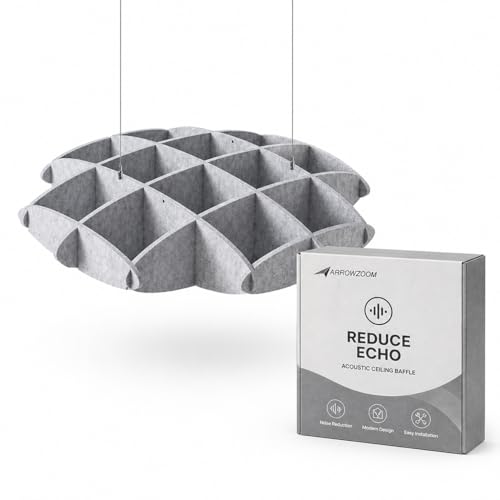
Arrowzoom panels are dense polyester fiberboard tiles sized at 80 cm (approximately 31 inches). They aim to reduce overhead noise and reflections for media spaces like home theaters, studios, and offices. The lightweight build supports easy overhead installation, and the gray color offers a modern look. Best for: spaces needing a balance of acoustic performance and manageable ceiling load. Limitation: 80 cm panels may require adaptation for non-metric ceiling grids and may involve trimming for perfect fit in some rooms.
Otoolling Large Hanging Baffles

These large hanging baffles measure 48″ x 24″ with a 15 mm thickness and come with steel cable ropes for ceiling mounting. Made from high-density polyester fiber, they provide substantial noise reduction in studios, classrooms, and offices. They offer a wide coverage area and a straightforward install process. Best for: rooms with high ceilings or where flexible hanging distance helps fine-tune acoustics. Limitation: hanging baffles require secure anchoring and may affect ceiling aesthetics in some spaces.
Armstrong 2×2 Ceiling Tiles

Armstrong 2×2 ceiling tiles are designed for standard 15/16″ grid installations. They feature a raised panel design with non-directional texture for easy alignment and minimal waste. The product is described as easy to replace in existing grids and aimed at reducing noise between rooms. Best for: retrofit projects in existing grids where quick replacement and consistent sizing matter. Limitation: this option is limited to standard grid compatibility and may not suit non-standard installations.
Buying Guide
What ceiling size should you choose?
Common suspended ceiling sizes are 2×2 feet and 2×4 feet. Your choice depends on room dimensions, grid compatibility, and desired acoustic density. 2×2 tiles are easier to replace individually, while 2×4 tiles cover more area per panel, reducing installation time.
What material offers best sound control?
Dense polyester fiberboard and high-density polyester fiber panels typically provide strong noise reduction and echo control. Moisture resistance helps in basements and humid environments, reducing warping and sagging over time.
Is glare control important for your space?
Black or non-reflective surfaces minimize light bounce from screens and stages, improving viewing comfort in home theaters and media rooms. If glare is less of a concern, lighter panels may better suit aesthetic goals.
How important is ease of installation?
Standard grid compatibility and lightweight designs shorten installation and reduce professional labor. Some products include hanging hardware or require minimal tools, which can be a deciding factor for DIY projects.
Are there safety and durability considerations?
Moisture resistance, fire safety ratings, and durable construction extend ceiling life. For classrooms, offices, and studios with frequent use, look for panels that resist sagging and maintain acoustic performance over time.
How to compare products quickly?
- Coverage area: total square feet per packaging.
- Panel size compatibility with your ceiling grid.
- Surface finish: glare reduction and aesthetics.
- Installation method and included hardware.
- Moisture resistance and durability in your environment.
FAQ
- What is the typical coverage for 24×24 inch ceiling tiles?
About 96 square feet per package, depending on layout. - Do these panels affect ceiling load?
Most are lightweight, but confirm grid compatibility and weight limits for your space. - Can I mix different tile sizes in the same ceiling?
Yes, if your grid supports it, but plan spacing to avoid visible gaps. - Are moisture-resistant panels suitable for basements?
Yes, moisture resistance helps prevent warping in damp areas. - Which panel is best for a home theater?
Panels with non-reflective black surfaces and strong noise reduction are advantageous. - Do higher-density panels outperform lighter ones?
In many cases, higher density improves sound absorption, but installation weight and mounting should be considered.