This guide highlights five reliable 4″ to 3″ reducer bushings and explains who each product is best for. It helps plumbers, DIY homeowners, and contractors choose the right connector for pipes and fittings across metals, plastics, and concrete environments. Read on to compare material, installation ease, and suitability for oils, water, air, and chemicals. The table below summarizes key details to aid quick decision-making.
| Product | Material | Best For | Notes |
|---|---|---|---|
| Reducer Hex Bushing – 4″ to 3″ (BORDSTRACT) | 304 Stainless Steel | Industrial and metal piping | Corrosion resistance; hex design for tool tightening |
| Cantex 5142227 – 4″ x 3″ (PVC) | Gray PVC | Conduit and ducting systems | Solvent welded connections; bell end reduction |
| Ozmosis PVC Schedule 80 – 4″ x 3″ | CPVC | Chemical and hot water lines | Flame retardant; corrosion resistant |
| Genova 30243 – 4″ x 3″ PVC | PVC | General plumbing and irrigation | Made in USA; hub insertion |
| DTGN 6Pcs – 4″ x 3″ PVC Reducer Bushings | PVC (Sch 40) | DIY projects and small builds | Furniture-grade; multiple units in one pack |
Reducer Hex Bushing, 4″ Male – 3″ Female BSPT 304 Stainless Steel

Best for heavy-duty metal piping projects, this 304 stainless steel reducer hex bushing connects 4″ male to 3″ female BSPT fittings. Its steel construction offers high strength and corrosion resistance in challenging environments, including oils, air, and gases. Installation is straightforward thanks to the hex shape that accepts standard tools. Choose this if you need durable service in industrial settings or where long-term resistance to wear matters. A potential limitation is that stainless steel can be heavier and more costly than plastic alternatives.
Cantex 5142227 4-Inch x 3-Inch Schedule-40/80 PVC Reducer Bushing

This gray PVC reducer is designed for conduit and ducting applications with solvent-weld connections. It reduces from 4 inches to 3 inches and fits into the conduit bell end to minimize diameter. Best for electrical and plumbing installations where a simple, permanent PVC joint is preferred. It’s important to verify compatibility with your conduit system and solvent welding practice; misalignment or improper welding can compromise flow.
Ozmosis PVC Schedule 80 Reducing Bushing, 4″ x 3″

This CPVC reducer bushing emphasizes safety and durability. It highlights low bacteria growth potential and flame retardant properties, along with corrosion resistance. It is suitable for chemical delivery lines and hot water systems where chemical resistance and heat tolerance are essential. If you’re working with non-CPVC materials or need non-flammable options in a non-chemical setting, consider alternatives.
Genova PVC Reducing Bushing, 4″ x 3″
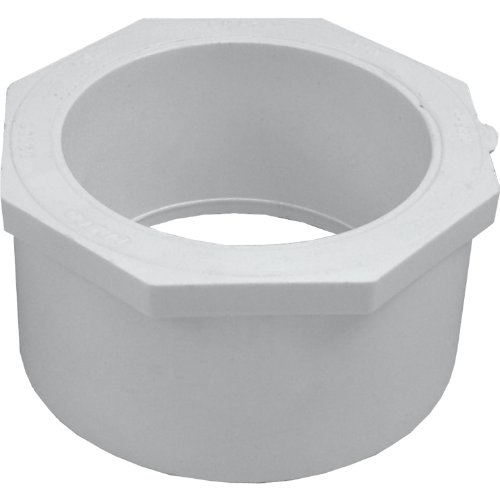
Genova’s 4×3 PVC reducer bushing inserts into a fitting hub to shrink to a smaller pipe size. Manufactured in the United States, this option is well-suited for standard plumbing and irrigation projects requiring a straightforward hub-to-pipe reduction. Choose this if you value local manufacturing and a simple hub-insertion installation. A limitation is that it is a PVC-only solution, which may not suit high-heat or aggressive chemical environments.
DTGN 6Pcs 4″ x 3″ PVC Reducer Bushings, SCH40

DTGN’s pack offers six 4″ x 3″ reducer bushings for Schedule 40 PVC. It emphasizes easy tool-free installation with potential cement for a permanent joint. Best for DIY projects, irrigation lines, and light to moderate plumbing tasks where multiple fittings are useful. Use PVC cement as needed to ensure a secure seal. For critical pressure or outdoor use, verify weather resistance and UV exposure tolerance.
Buying Guide
Material matters. Stainless steel (304) provides corrosion resistance and strength for metal piping; CPVC is flame-retardant and chemical resistant; PVC offers economy and ease for plumbing and irrigation. Consider environment, temperature, and chemical exposure when selecting a reducer bushing.
Connection type and fit. Ensure the sizing (4″ to 3″) corresponds to your pipe and fitting hubs. Decide between slip, socket, or threaded connections and whether solvent welding or cementing is required for compatibility with existing installations.
Installation ease. Hex bolts, quick push-fit, or cementing methods affect job speed and reliability. For DIY projects, tool-free and cement-friendly options may be preferable. For high-demand systems, durable materials like stainless steel or CPVC reduce maintenance needs over time.
Environmental and safety considerations. Consider flame retardancy, bacterial growth resistance, and corrosion tolerance. This is especially important for potable water lines, chemical transport, and outdoor exposure.
FAQ
- What is a 4×3 reducer bushing used for? It connects a 4-inch pipe to a 3-inch pipe or fitting, allowing a transition between different sizes in plumbing or piping systems.
- Which material should I choose for outdoor water lines? PVC or CPVC is typically chosen for outdoor water lines due to cost and good chemical resistance; CPVC adds higher chemical and temperature tolerance.
- Is cement required for PVC reducers? Some applications use solvent cement for a permanent joint; others may use push-fit or slip connections with appropriate sealants or gaskets.
- Can I use stainless steel reducers with PVC piping? Generally not without adapters; matched materials prevent galvanic corrosion and ensure proper sealing.
- Are reducer bushings available in packs? Yes, some sets include multiple pieces to cover common sizes in one purchase, which is convenient for DIY projects and larger installations.
- What should I consider for chemical handling lines? Prioritize CPVC or corrosion-resistant materials and ensure compatibility with the chemical profile and temperature range of the system.