Inline check valves protect plumbing systems by preventing backflow in cold, hot, and wastewater lines. This guide highlights five practical options suited for different needs—from rugged commercial setups to home DIY projects. Whether you’re choosing for residential water lines, sump outflow, or industrial piping, these selections balance flow, durability, and compatibility. The buyer’s priority here is reliability, ease of installation, and clear identification of the best use case for each model.
Summary table of chosen products:
| Product | Brand | Best For | Connection Type |
|---|---|---|---|
| MIDLINE VALVE PVC Inline Check Valve | Midline Valve | Cold water lines with solvent connections | Solvent Weld |
| Check Valve, 2 in, Inline Swing | Zoeller | Sump disposal and wastewater lines | Solvent Weld x Solvent Weld |
| Liberty Pumps CV200C | Liberty Pumps | Heavy-duty PVC with vertical/horizontal installs | Compression |
| 2″ NPT Stainless Steel Spring Check Valve | SYWUWV | Industrial backflow prevention in multiple media | NPT Thread |
| Matco-Norca 523T08 2″ In-Line Check Valve | Arikit | Threaded systems with SS spring | Threaded |
Midline Valve PVC Inline Check Valve For Backflow Prevention

The Midline Valve model uses a stainless steel spring-loaded check to prevent backflow in cold water lines. Its crack pressure at 0.5 PSI and a maximum rating of 150 PSI at 73°F support steady, low-pressure protection in residential or light commercial applications. The solvent connections provide quick, reliable installation in systems designed for non-potable water. As a selection, this valve is best for projects requiring lead-free construction with ANSI and ASTM approvals, and a compact, corrosion-resistant design.
Best for: Homeowners or small businesses pursuing backflow prevention in cold-water lines with solvent connections. Choose this if you primarily need a compact, solvent-weld option that carries solid regulatory credentials.
Caution: This valve is not recommended for potable water use in some jurisdictions; verify local code requirements before installation. Data shows ISO 9002 approved manufacturing and standard temperature range 41°-140° F, which suits typical indoor plumbing conditions.
Zoeller Check Valve Inline Swing (2 in)

The Zoeller inline swing check valve is designed to prevent backflow in wastewater and sump disposal lines, making it a solid pick for basement drain and sump pump systems. Its simple swing mechanism offers dependable one-way flow, helping to avoid backflow contamination in residential effluent lines. This model is especially suitable where space is constrained, and installation is straightforward with solvent weld connections.
Best for: Homeowners managing sump or wastewater lines where a reliable, straightforward backflow prevention solution is needed. It’s a practical choice when you want a simple installation with predictable one-way flow.
Caution: The product notes mention its use for sump disposal lines and wastewater; confirm compatibility with your exact wastewater piping and local codes before installation.
Liberty Pumps CV200C 2-Inch Compression Check Valve
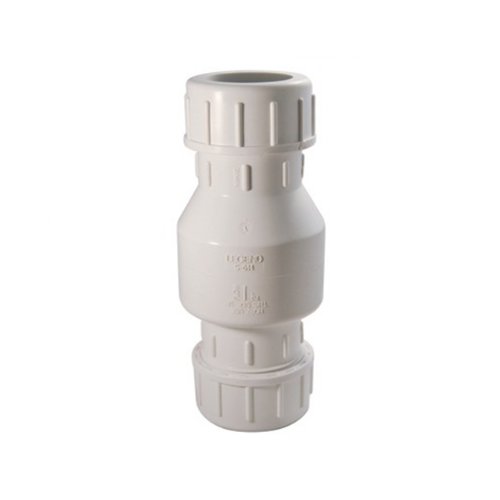
The Liberty Pumps CV200C features a heavy-duty PVC body rated for 150 psi and supports vertical or horizontal installation. The compression connection offers a durable, quick-seal fit that can simplify replacement or upgrades in larger or more permanent installations. This valve is well-suited for clean water applications and systems needing robust performance with flexible mounting options.
Best for: Projects requiring a heavy-duty, versatile inline valve with easy compression connections and multiple orientation options. Choose this if you want a durable valve that can adapt to different pipe routes.
Caution: While rated for 150 psi, confirm that your system’s pressure and temperature align with the valve’s operational limits to prevent leakage or failure over time.
2″ NPT Stainless Steel Spring Check Valve (SYWUWV)

This 2″ NPT stainless steel spring check valve emphasizes one-way flow control with a robust, explosion-proof and wear-resistant design. The inner wall is polished to minimize scaling and clogging, contributing to a long service life in media such as oil, water, gas, and air. It is well-suited for industrial and multi-media lines that require dependable backflow prevention and durable construction.
Best for: Industrial or multi-media piping where corrosion resistance and high-temperature tolerance are important. Consider this option if you need a robust stainless steel body and a compact, one-way valve design.
Caution: The product is designed for various media; ensure compatibility with your specific fluid and service conditions to prevent material incompatibility.
Matco-Norca 523T08 Inline Check Valve With SS Spring

The Matco-Norca 523T08 model offers a spring-loaded inline check valve with threaded ends and a maximum working temperature around 122°F (50°C). This product emphasizes a compact, threaded connection for reliable inline installation in pipe networks. It’s a solid choice for systems that need precise, threaded fittings and a dependable spring mechanism to prevent backflow.
Best for: Systems with threaded connections where space is limited and a secure seal is needed. Choose this if you prefer a threaded inline design with a stainless spring for consistent performance.
Caution: Threaded connections require correct sizing and sealing practices to avoid leaks; verify thread type and compatibility with your piping system.
Buying Guide: How To Choose The Right Inline Check Valve
What determines the best inline check valve for your project?
- Connection type: Solvent weld, compression, or NPT threads affect compatibility with existing piping. Choose a style that minimizes alterations to your system.
- Media suitability: Some valves are intended for potable water, others for wastewater or non-potable lines. Confirm the valve’s compatibility with your fluid to avoid material degradation or contamination.
- Pressure rating: Look at cracking pressure and maximum psi. If your system experiences variable pressure, prefer a valve with a favorable opening pressure and robust sealing.
- Installation orientation: Vertical vs. horizontal mounting can influence performance. Some models support both, which provides flexibility in layout design.
- Material durability: Stainless steel springs and lead-free brass bodies offer longevity in challenging environments, while PVC bodies are cost-effective for light-duty use.
- Regulatory compliance: ANSI, ASTM, and ISO certifications can indicate manufacturing standards and suitability for certain environments.
Practical Scenarios
- Residential plumbing: A solvent-weld inline valve with lead-free materials is often ideal for cold water lines and simple retrofits.
- Sump and wastewater lines: An inline swing valve with straightforward installation can prevent backflow in basement drains.
- Industrial piping: Stainless steel spring valves with threaded ends fit tight spaces and provide durable service in varied media.
Installation Tips
- Clean and deburr pipe ends before connecting to prevent leaks and ensure a tight seal.
- Use the correct sealant or gaskets recommended for the connection type to maximize longevity.
- Check for proper flow direction marked on the valve body to avoid installation errors.
FAQ
- What is backflow prevention, and why is it important? It prevents contaminated water from flowing back into clean water supplies or other parts of a system.
- What is the difference between solvent weld and compression connections? Solvent weld fuses PVC parts permanently; compression uses a gasket and nut to seal around the pipe.
- Can inline check valves be used in hot water lines? Some models tolerate higher temperatures, but always verify the manufacturer’s temperature rating.
- Does size matter for check valves? Yes, matching pipe diameter is essential; using the wrong size can cause reduced flow or leakage.
- Are inline check valves reusable after maintenance? Some designs allow repacking or resealing, but many are designed for permanent installation.
- What should I check after installation? Confirm no leaks at joints, verify correct flow direction, and test backflow prevention under safe test conditions.